GLOBETROTTER SCIENCE SITE
  • Home
  • ABOUT
  • COURSES
    • Anatomy
    • Biology >
      • Biology Syllabus
      • Course Content >
        • Unit 1: Intro to Biology
        • UNIT 2: Biochemistry
        • UNIT 3: Cells
        • UNIT 4: Cell Processes
        • UNIT 5: Molecular Genetics
        • UNIT 6: Inheritance Genetics
        • UNIT 7: Evolution & Adaptation
        • UNIT 8: Ecology
        • BIO EOC EXAM REVIEW
    • CHEMISTRY >
      • Chemistry Syllabus
      • Course Content >
        • Unit 1: Intro to Chemistry
        • Unit 2: Thermochemistry
        • Unit 3: Atomic Structure & Nuclear Chem
        • Unit 4: Periodic Table
        • Unit 5: Chemical Bonding
        • Unit 6: Chemical Reactions
        • Unit 7: Stoichiometry
        • Unit 8: Solutions
        • Unit 9: Chemical Equations
        • Unit 10: Acids & Bases
        • Chem Final Exam Review
    • Earth Science >
      • Earth Science Syllabus
      • Course Content >
        • Unit 1: Intro to Earth Science
        • Unit 2: Biosphere & Sustainability
        • Unit 3: Lithosphere (Geology)
        • Unit 4: Hydrosphere
        • Unit 5: Atmosphere
        • Unit 6: Astronomy
        • ES FINAL EXAM REVIEW
    • Marine Science >
      • Marine Syllabus
      • COURSE CONTENT >
        • UNIT 1: INTRO TO MARINE SCIENCE
        • UNIT 2: OCEAN ENVIRONMENT
        • UNIT 3: MICROBES & PRIMARY PRODUCERS
        • UNIT 4: INVERTEBRATES
        • UNIT 5: MARINE FISHES
        • UNIT 6: MARINE REPTILES & BIRDS
        • UNIT 7: MARINE MAMMALS
        • UNIT 8: INTERTIDAL, ESTUARIES & CORAL REEFS
        • UNIT 9: CONTINENTAL SHELVES, OPEN SEA & DEEP OCEAN
        • UNIT 10: HUMANS & THE SEA
        • MS FINAL EXAM REVIEW
      • RESOURCES
    • Physical Science >
      • Phys Sci Syllabus
      • Course Content >
        • Unit 1: Intro to Physical Sci
        • Unit 2: Motion
        • Unit 3: Forces
        • Unit 4: Work, Power & Energy
        • Unit 5: Electricity & Magnetism
        • Unit 6: Waves
        • Unit 7: Matter
        • Unit 8: Atomic Structure
        • Unit 9: The Periodic Table
        • Unit 10: Chemical Bonding
        • Unit 11: Chemical Reactions
        • Unit 12: Acids, Bases & Solutions
        • PS FINAL EXAM REVIEW
  • ENRICHMENT
    • Equine Science
  • ESL
    • ESL Biology
    • ESL Earth Science >
      • Course Content >
        • Welcome
        • UNIT 1: Intro to Earth Science
        • UNIT 2: Environmental Science
        • UNIT 3: Biosphere
        • UNIT 4: Lithosphere
        • UNIT 5: Hydrosphere
        • UNIT 6: Atmosphere
        • UNIT 7: Astronomy
  • TUTORING
  • CONTACT
< PREVIOUS
NEXT >
Picture

unit 6: inheritance 

​genetics

(14 DAYS)

Genetics is the study of heredity and occupies a central position in modern biology. The discipline has great impact on many everyday aspects of human life. The food we eat and the clothes we wear come from organisms improved by application of genetic principles. The causes of important human diseases are being discovered, and therapies developed, based on fundamental genetic investigations. Increasingly, management of human health also depends on genetic and genomic information. 

NC STANDARDS
Bio.3.2.1 Explain the role of meiosis in sexual reproduction and genetic variation.
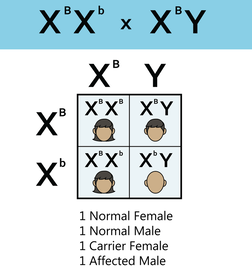
Bio.3.2.2 Predict offspring ratios based on a variety on inheritance patterns (including: dominance, co-dominance, incomplete dominance, multiple alleles, and sex-linked traits).
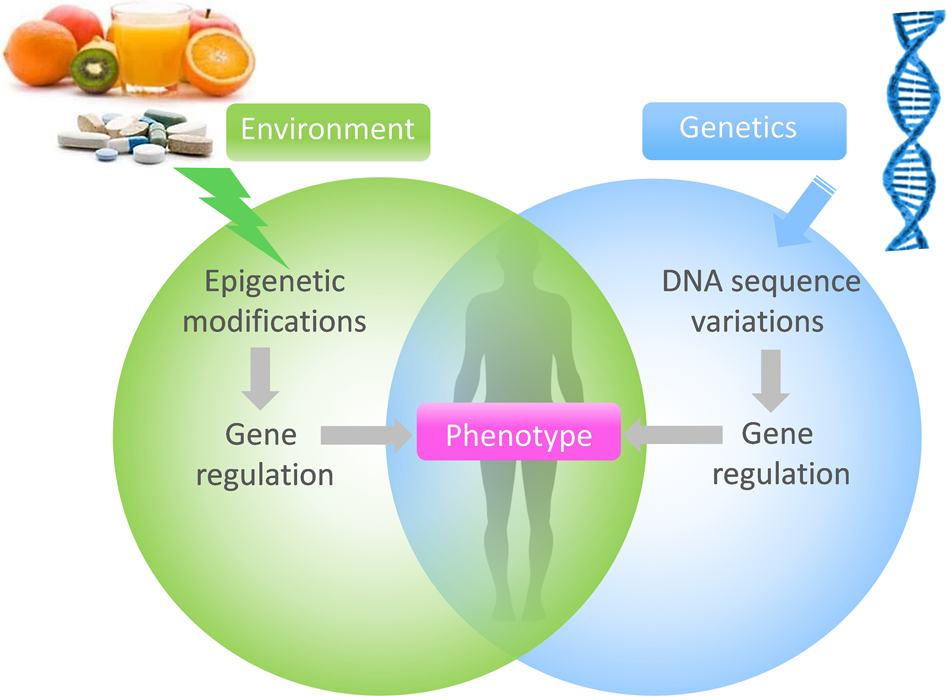
​Bio.3.2.3 Explain how the environment can influence the expression of genetic traits.
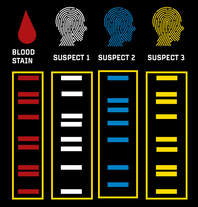
Bio.3.3.1 Interpret how DNA is used for comparison and identification of organisms.
Bio.3.3.2 Summarize how transgenic organisms are engineered to benefit society.
Bio.3.3.3 Evaluate some of the ethical issues surrounding the use of DNA technology (including cloning, genetically modified organisms, stem cell research, and Human Genome Project).
ESSENTIAL QUESTIONS
​How is meiosis different from mitosis?
How is the process of meiosis related to maintaining genetic variation in a species?
What is the sequence and function of meiosis?
How are Punnett squares used to determine the probability that offspring will have a certain trait?
What factors influence gene expression?
How is a DNA fingerprint produced and interpreted?
How are transgenic organisms created and used in agriculture and industry?
What are the differences between embryonic and adult stem cells?
What are some of the ethical issues that arise in genetic research and with the use of biotechnology?
How are genetic disorders identified and described using pedigrees and karyotypes?

WARM UPS
UNIT 6 PRIME TIMES
​
PRIME TIME SHEET
Vocabulary

DAY 1: KARYOTYPES
NOTES-Karyotypes
​Guided Notes-Karyotypes
Karyotype Analysis
HONORS
Taz Genetics

DAY 2: INTRO TO HEREDITY
NOTES-Intro to Heredity
Guided Notes-Intro to Heredity
Heredity Reading Comprehension
HONORS
Heredity Vocab

DAY 3: COMPLETE DOMINANCE
NOTES-Complete Dominance
Guided Notes-Complete Dominance
Genetics & Punnett Squares
​Practice-Simple Genetics

DAY 4: INCOMPLETE & CO-DOMINANCE
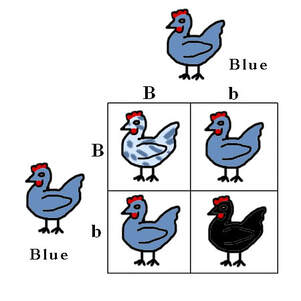
NOTES-Incomplete & CoDominance
Guided Notes-Incomplete & CoDominance
Incomplete & CoDominance Worksheet


HONORS
Blood Disorders

DAY 5: SEX-LINKED TRAITS
NOTES-Sex-Linked Traits
​Guided Notes-Sex-Linked Traits
SpongeBob Sex-Linked Traits
HONORS
So Fly: Sex-Linked Traits
Genetic Disorders - Sex-Linked
Picture

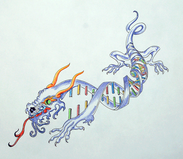
DAY 6: QUIZ & DRAGON GENETICS
QUIZ - Punnett Squares. Must print a copy
Dragon Genetics
Picture

DAY 7: PEDIGREES
​NOTES-Pedigrees
Guided Notes-Pedigrees
Practice Pedigree Charts
HONORS
Pedigree Practice

DAY 8: DIFFERENTIATION & STEM CELLS
NOTES-Differentiation & Stem Cells
Guided Notes-Differentiation & Stem Cells
​Specialized Cell Poster
QUIZ-Differentiation


HONORS
Stem Cells Activity

DAY 9: EPIGENETICS
NOTES-Epigenetics
Guided Notes-Epigenetics

​Epigenetics-S
HONORS
Epigenetics-H
Picture

DAY 10: ELECTROPHORESIS & DNA FINGERPRINTING
NOTES-Electrophoresis & DNA Fingerprinting
Guided Notes-Electrophoresis & DNA Fingerprinting
Gel Electrophoresis
HONORS
Model DNA Fingerprinting
GEL ELECTROPHORESIS ONLINE GAME
Picture

DAY 11: BIOTECH & GMO's
NOTES-Biotech & GMO's
Guided Notes-Biotech & GMO's
GMO Reading
HONORS
Biotechnology Practice

DAY 12: HGP & BIOETHICS
NOTES-HGP & Bioethics
Guided Notes-HGP & Bioethics
Your Genes Your Choice
bioethics-your_genes.pdf
File Size: 1682 kb
File Type: pdf
Download File


DAY 13: REVIEW
KAHOOT Unit 6 Test Review

REVIEW GAMES
Genetics Challenge Board Game
Genetics Rags To Riches Game
Genetic Engineering Rags to Riches Game

DAY 14: UNIT TEST
< PREVIOUS
NEXT >
Proudly powered by Weebly
  • Home
  • ABOUT
  • COURSES
    • Anatomy
    • Biology >
      • Biology Syllabus
      • Course Content >
        • Unit 1: Intro to Biology
        • UNIT 2: Biochemistry
        • UNIT 3: Cells
        • UNIT 4: Cell Processes
        • UNIT 5: Molecular Genetics
        • UNIT 6: Inheritance Genetics
        • UNIT 7: Evolution & Adaptation
        • UNIT 8: Ecology
        • BIO EOC EXAM REVIEW
    • CHEMISTRY >
      • Chemistry Syllabus
      • Course Content >
        • Unit 1: Intro to Chemistry
        • Unit 2: Thermochemistry
        • Unit 3: Atomic Structure & Nuclear Chem
        • Unit 4: Periodic Table
        • Unit 5: Chemical Bonding
        • Unit 6: Chemical Reactions
        • Unit 7: Stoichiometry
        • Unit 8: Solutions
        • Unit 9: Chemical Equations
        • Unit 10: Acids & Bases
        • Chem Final Exam Review
    • Earth Science >
      • Earth Science Syllabus
      • Course Content >
        • Unit 1: Intro to Earth Science
        • Unit 2: Biosphere & Sustainability
        • Unit 3: Lithosphere (Geology)
        • Unit 4: Hydrosphere
        • Unit 5: Atmosphere
        • Unit 6: Astronomy
        • ES FINAL EXAM REVIEW
    • Marine Science >
      • Marine Syllabus
      • COURSE CONTENT >
        • UNIT 1: INTRO TO MARINE SCIENCE
        • UNIT 2: OCEAN ENVIRONMENT
        • UNIT 3: MICROBES & PRIMARY PRODUCERS
        • UNIT 4: INVERTEBRATES
        • UNIT 5: MARINE FISHES
        • UNIT 6: MARINE REPTILES & BIRDS
        • UNIT 7: MARINE MAMMALS
        • UNIT 8: INTERTIDAL, ESTUARIES & CORAL REEFS
        • UNIT 9: CONTINENTAL SHELVES, OPEN SEA & DEEP OCEAN
        • UNIT 10: HUMANS & THE SEA
        • MS FINAL EXAM REVIEW
      • RESOURCES
    • Physical Science >
      • Phys Sci Syllabus
      • Course Content >
        • Unit 1: Intro to Physical Sci
        • Unit 2: Motion
        • Unit 3: Forces
        • Unit 4: Work, Power & Energy
        • Unit 5: Electricity & Magnetism
        • Unit 6: Waves
        • Unit 7: Matter
        • Unit 8: Atomic Structure
        • Unit 9: The Periodic Table
        • Unit 10: Chemical Bonding
        • Unit 11: Chemical Reactions
        • Unit 12: Acids, Bases & Solutions
        • PS FINAL EXAM REVIEW
  • ENRICHMENT
    • Equine Science
  • ESL
    • ESL Biology
    • ESL Earth Science >
      • Course Content >
        • Welcome
        • UNIT 1: Intro to Earth Science
        • UNIT 2: Environmental Science
        • UNIT 3: Biosphere
        • UNIT 4: Lithosphere
        • UNIT 5: Hydrosphere
        • UNIT 6: Atmosphere
        • UNIT 7: Astronomy
  • TUTORING
  • CONTACT